
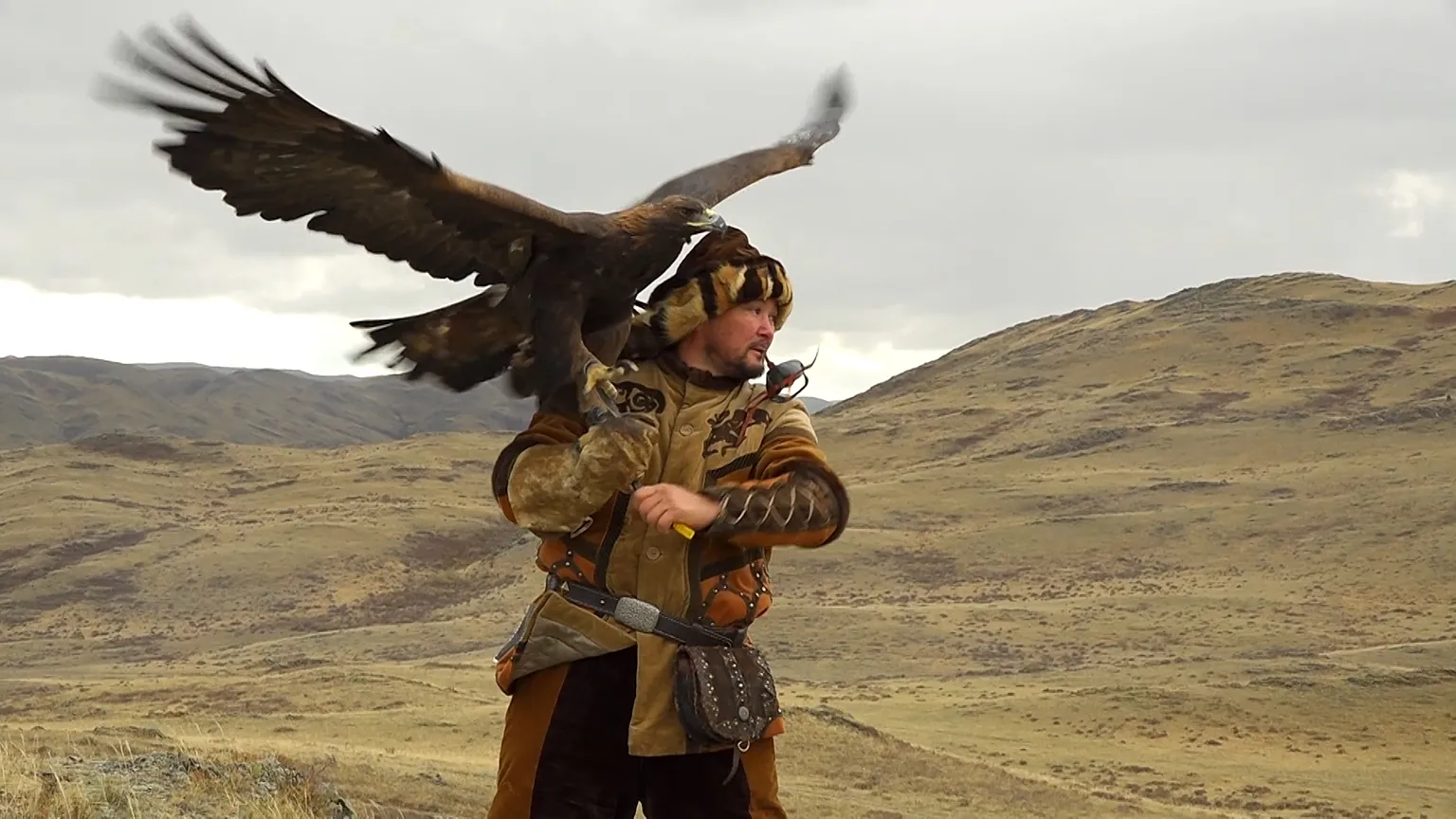
The international festival “Shygys Salburyny — 2026” took place in the village of Bozanbay, Ulan District. Its main event was the first Open Asian Cup in qusbegilik, the traditional art of hunting with trained birds of prey. At the “Burkit Tobe” venue, skilled falconers gathered to celebrate and preserve centuries-old traditions of hunting with golden eagles, hawks, and falcons.
The festival brought together 176 falconers and other practitioners of traditional hunting with birds of prey from ten countries, including Kazakhstan, Hungary, Spain, Mongolia, China, and Türkiye. Around 15,000 spectators attended the event, including international tourists.
The festival's history dates back to 2021, when the local “Qansonar” golden eagle hunters' tournament was first held in Bozanbay. Since 2022, the competition has been organized under the name “Shygys Salburyny,” gradually expanding its reach. Hosting the first Open Asian Cup marked a new stage in the festival's development and strengthened Bozanbay's recognition as a place where nomadic cultural traditions remain alive.
At the heart of the competition is the skill of qusbegiler, developed through years of training, patience, and a deep understanding of birds of prey. Spectators witnessed the precision required of each falconer and the importance of trust between the handler and the bird. This firsthand experience makes the festival special: an ancient tradition is presented not as a distant memory but as a living cultural heritage.
The winners of the main disciplines were Serikbolsyn Zhalgasuly from Zhambyl Region in the golden eagle competition, Makhmudkhan Zaki from Turkistan Region in the hawk competition, and Temirali Tolegenuly from Karaganda Region in the saker falcon competition.
The festival program also featured other national sports and traditional competitions, including tazy dog races, zhamba atu (target shooting), tenge ilu (picking up coins on horseback), archery, strength contests, and horse-taming demonstrations. Guests could also explore an ethnic village, visit craft exhibitions, enjoy traditional Kazakh cuisine, and attend concerts. Together, these activities offered visitors a broader experience of Kazakhstan's cultural heritage.
For Bozanbay, hosting an international festival creates opportunities to develop tourism based on its own cultural heritage. Events of this scale attract visitors and can generate additional demand for accommodation, food services, local businesses, and handmade products. At the same time, the long-term success of this approach depends on preserving the tradition itself and ensuring that its practitioners remain actively involved in the community.
The festival is particularly meaningful for younger generations. Meeting skilled falconers from different countries demonstrates that their region's cultural heritage attracts interest far beyond Kazakhstan. Passing knowledge and experience from elders to younger practitioners helps preserve qusbegilik as a living tradition that continues to connect people and generations.