






Dildar Qalyqan

Ardak Smailov

Klara Mendybaeva
FAQ
A sustainable development strategy can significantly improve the quality of life of district residents, ensuring long-term well-being both at the individual and collective levels: creating a safe and healthy environment, improving housing conditions, access to clean water and air, creating jobs, stimulating entrepreneurship, developing transport, energy and water supply systems, and preserving cultural traditions and identity.
A sustainable development strategy provides entrepreneurs with an understanding of what changes and developments are expected in the district in the future. This helps them adapt to changes and plan their activities.
The sustainable development strategy will define priority development areas and sectors that will receive special attention from the state and society. Businesses operating in these sectors may gain access to additional resources, funding, and support.
Furthermore, the development strategy fosters closer ties between the business community and government authorities, which can help build partnerships and collaboration aimed at mutual success.
Work on developing a sustainable development strategy for a district must begin with thorough preparation and defining the key stages of the process. Here are the essential steps to start with:
- Current state analysis: Assess the current situation in the district. Examine social, economic, and environmental aspects, and identify challenges, needs, and opportunities.
- Setting goals and priorities: Define the main goals and objectives you want to achieve through the strategy.
- Stakeholder engagement: Involve residents, businesses, government authorities, and other stakeholders. Conduct consultations, surveys, and discussions to gather a diverse range of perspectives.
- Team building: Form a team responsible for developing the strategy. Include representatives from the community, government authorities, and other key participants.
- Data collection and analysis: Gather data on the district's demographics, economy, environment, infrastructure, and other aspects. Conduct an analysis to understand the current situation and needs.
- Establishing success metrics: Define specific indicators to measure the success of the strategy's implementation. These can include both quantitative and qualitative metrics.
- Developing strategic goals and actions: Outline long-term strategic goals that will guide the district's development. Design specific actions and projects to achieve them.
- Securing funding and resources: Estimate the resources required to implement the strategy. Consider funding sources, potential partnerships, and ways to raise funds.
- Creating a timeline: Define the timeframe for the strategy's implementation. Break down long-term goals into short-term, medium-term, and long-term phases.
- Participation and feedback: Involve stakeholders in the development process and provide opportunities for feedback and adjustments.
- Approval and communication: Once the strategy is developed, ensure it receives approval and support from residents, government authorities, and other key stakeholders. Create a communication plan to spread awareness about the strategy.
- Implementation and monitoring: Begin executing the strategy, guided by its goals and action plans. Continuously monitor and evaluate the results, making adjustments as needed.
To develop and approve a sustainable development strategy for a district, establishing a fund is not mandatory. What is necessary is to have a team of like-minded people—including active residents, government authorities, elders, and business representatives—who are genuinely interested in the sustainable development of the district.
Involving district residents in developing a sustainable development strategy is a crucial and essential step. To achieve this, public hearings can be held where residents can express their opinions, ideas, and concerns regarding the district's development. Additionally, a working group can be formed consisting of deputies of the district maslikhat, local community activists, party representatives, and district elders.
Spreading information about the development process and opportunities for participation through local social media accounts and messengers will help raise awareness among residents.
Yes, developing a sustainable development strategy for a district requires certain specialized knowledge and competencies. While understanding the basic concepts of sustainable development and ensuring stakeholder participation are important, professional expertise and skills can significantly facilitate and improve the development process. Here are some of the key areas of knowledge that can be useful when developing a sustainable development strategy:
- Skills in data analysis and assessment of the district's current state, needs, and challenges, as well as the ability to define key indicators and goals;
- The ability to plan, manage, and track the implementation of projects included in the strategy, while optimizing resources and meeting deadlines;
- Knowledge of methods for engaging with various stakeholders, the ability to conduct consultations and discussions, and the skill to integrate diverse viewpoints;
- Knowledge of local, regional, and national laws and regulations, as well as their impact on the implementation of the strategy.
During the process of developing a sustainable development strategy for districts, financial resources may be required for organizing meetings with local residents, as well as for professional consultations and expertise.
If all active stakeholders in the district—such as the akimat and businesses—participate in developing the strategy, funding might not even be necessary (provided that the participants utilize their own resources).
When developing a sustainable development strategy for a district, various problems and complexities can arise. Here are some of the main challenges that are frequently encountered during this process:
- Diversity of interests and opinions: district residents, the business community, authorities, and other stakeholders may hold differing opinions, interests, and priorities regarding future development. Ensuring consensus among all perspectives can be a challenging task.
- Lack of data and analytics: developing a strategy requires reliable and up-to-date data on the district's current state, its needs, and challenges. The absence or insufficiency of data can hinder proper analysis and planning.
- Resistance to change: introducing new practices, projects, and activities related to sustainable development can provoke resistance from those who are accustomed to the current status quo.
- Lack of participation and support: ensuring the active engagement and backing of residents, businesses, and other stakeholders can be difficult, especially if they do not see the immediate benefits of the strategy.
- Lack of coordination: implementing the strategy may require cooperation among various organizations, government, and non-governmental bodies. A lack of coordination can slow down the process.
Overcoming these challenges requires careful planning, the inclusion of all stakeholders, transparency, flexibility, and a willingness to cooperate.
To institutionalize the developed sustainable development strategy of a district for the long term, it must be approved by a resolution of the district maslikhat (local representative body). This will ensure the strategy's implementation regardless of how frequently representatives of local executive bodies (district akimats) change.
The Foundation can assist with formulating the strategy, provided that a high-quality analysis of the district's socio-economic status is available.
What Is Sustainable Development?
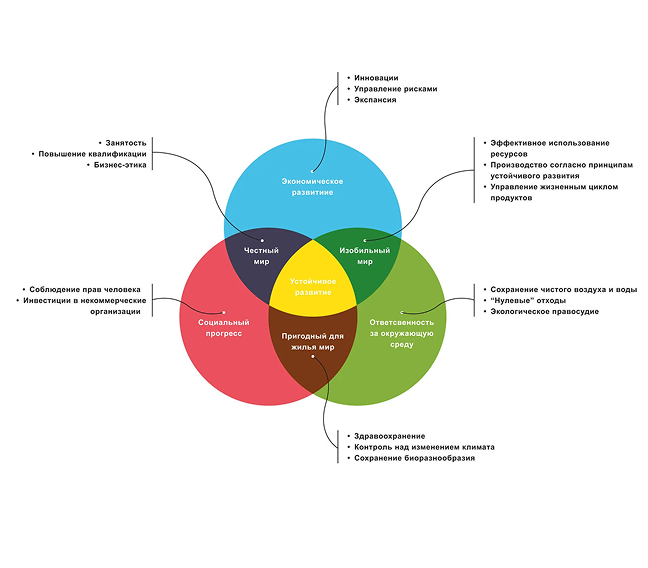
Sustainable development means improving people's lives today without depriving future generations of their chance for a decent life. It is built on a balance of three components: economy, society, and ecology.
Economy
- stable growth and productive workplaces;
- income growth and quality of life;
- support for innovations and technologies that do not consume resources.
Social Sphere
- equal opportunities and access to basic services: education, healthcare, housing, social protection;
- reduction of poverty and inequality;
- respect for human rights and inclusivity of all groups.
Ecology
- nature conservation: biodiversity and ecosystems;
- careful use of water, soil, and energy;
- fewer emissions and waste, more clean energy sources.
Why is this needed?
To ensure that countries, cities, and villages develop long-term and fairly: the economy grows, people are not left behind, and nature is not depleted.
Sustainable Territorial Development
How Is a District Sustainable Development Strategy Developed?
A territory's sustainable development strategy is a document or plan that defines the goals, priorities, and specific measures to achieve sustainable development within a specific area.
How Is a District Sustainable Development Strategy Developed?
- Analysis of the district's current socio-economic development;
- Identification of the weakest points and key advantages of the district;
- Formulation of the district's sustainable development strategy;
- Drafting of an action plan for the strategy's implementation across short-, medium-, and long-term periods;
- Management of the district's development strategy.
The sustainable development strategy includes mechanisms for the participation of local executive bodies, the business community, civil society, and the general public. It is essential that the strategy is developed collaboratively and considers various opinions and interests to ensure broad support and successful implementation.
It is important to note that sustainable development is an ongoing process; therefore, the sustainable development strategy may be adjusted annually, with the changes reflecting shifts in the external and internal environment.
What Is the Purpose of a District Sustainable Development Strategy?
The district's sustainable development strategy is a long-term vision for developing the region with a balanced social, economic, and environmental sphere for current and future generations. Having a clear image of the district's future helps curb outward migration and enables business development that accounts for environmental factors.