
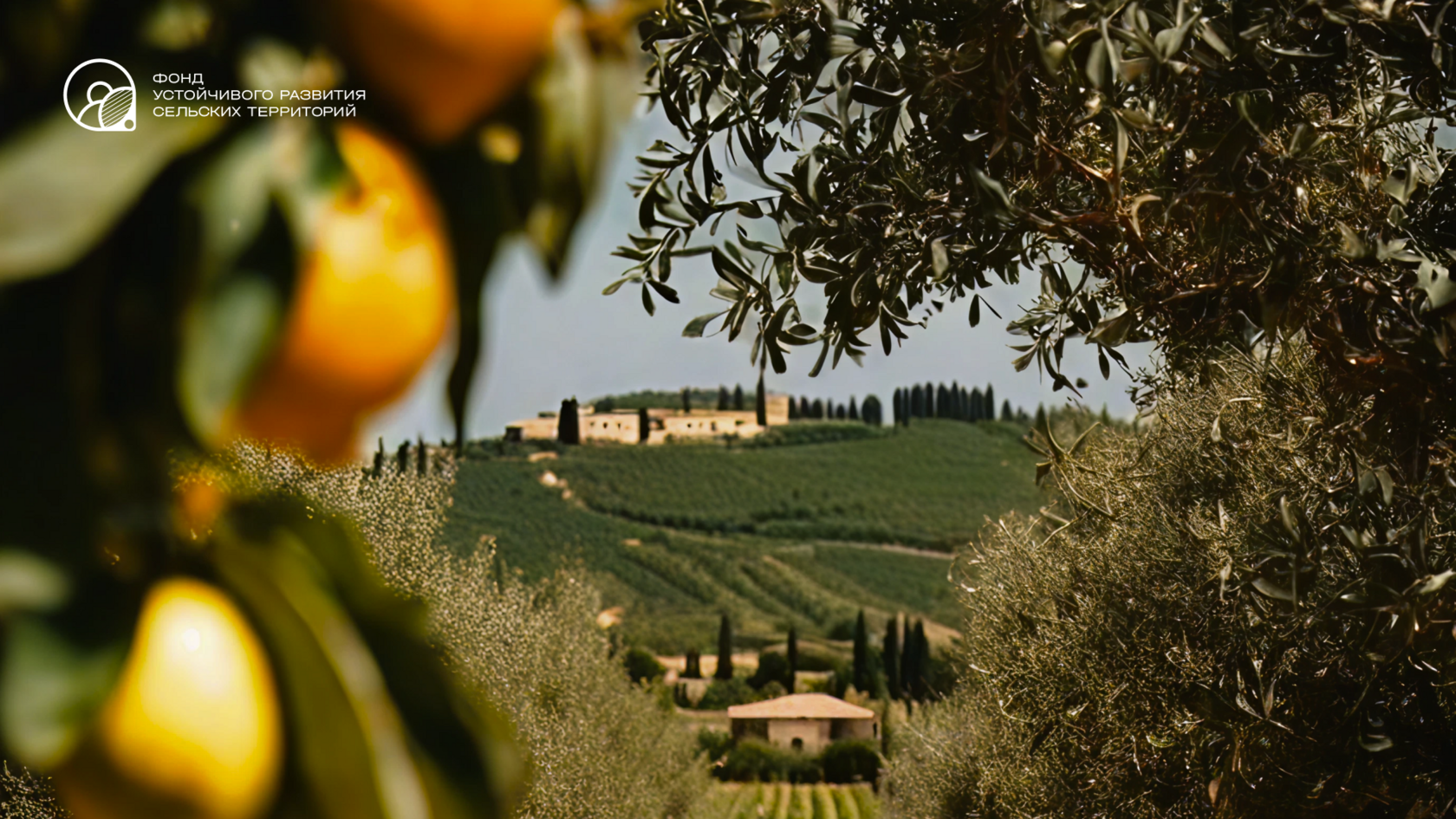
The Italian hinterland has been losing its youth for decades: over 70 years, the population of remote settlements has shrunk by about a quarter. The response was a combination of measures: grants for startups, "long-term" money for young farmers, and billions in investments into borghi (historic villages). For Kazakhstan, where 37% of the population lives in rural areas, this experience is highly illustrative.
From History to Statistics
After World War II, the Italian province began to rapidly lose its population. Young people left the aree interne – remote rural territories – for opportunities in major economic centers [1]. This has led to a situation where today more than half of all Italians live in large cities [2], and many mountainous and rural communes have turned into "ghost villages" with predominantly elderly residents. Over 70 years (1951–2019), the population of remote settlements fell by 26%, while major cities grew by 30–50% [3]. Even in the last decade, despite the overall stabilization of Italy's population, the most remote corners continued to lose inhabitants [4].
However, the hardest hit was felt in the south. In the Mezzogiorno, the labor market is weaker and young people leave: nearly 330,000 specialists have departed from the inland areas in recent years, with only 198,000 returning; a falling birth rate accelerates the decline and the loss of human capital.
The Place-Based Approach
Recognizing the scale of the problem, the Italian government launched the National Strategy for Inner Areas (SNAI) in 2013 – a targeted, place-based program to revitalize depressed zones [5]. Fabrizio Barca's team conducted an "X-ray" of the country's access to basic services and set a simple criterion: if it takes more than 20 minutes to reach a hospital, a school, and a train station, it belongs to the aree interne. Such territories account for about 60% of the land area and more than half of the communes, yet only about 22% of the population lives there. This is where the efforts were directed.
Between 2014 and 2020, 72 pilot zones were selected (1000+ communes, ~2 million residents), and a tailored package was assembled for each: transport and connectivity, medicine and schools, and business support. The condition was a "bottom-up" approach: mayors unite, set priorities together with residents, and take responsibility for implementation. By 2020, over €1.1 billion from national and European funds had been allocated to implement strategies in 71 pilot zones. The logic was twofold: to bring basic services up to urban standards and to kickstart the local economy.
«I'm Staying in the South»: Betting on Young Entrepreneurs
Infrastructure alone cannot retain young people – jobs are needed. In 2017, the Italian government launched the Resto al Sud ("I'm Staying in the South") program, aimed at combating brain drain from the poorest regions [6]. A total of €1.25 billion was allocated to the program, which initially covered eight southern regions (Abruzzo, Apulia, Basilicata, Calabria, Campania, Molise, Sardinia, Sicily) and was available to individuals under 35; it was later expanded to certain earthquake-affected communes and the age limit was raised – first to 46, and from 2021, to 55.
The terms are generous: €50,000–200,000 per project to launch (depending on the number of founders), consisting of a 50% grant and a 50% subsidized loan backed by state guarantees; interest is covered by Invitalia, which operates a network of information centers across the south. At the start, less than 40% of applications were approved due to raw projects and non-compliance, alongside a "fear of failure" (affecting about 60% of young people, according to the OECD [7]). After adjustments, the program gained momentum: freelancers were admitted, and businesses were allowed to relocate from large cities to villages.
Результат: к августу 2023 года профинансировано 16 286 проектов и создано 57 000+ рабочих мест; по данным на 2025 год – около 19 000 новых предприятий и 63 000 рабочих мест. Самые активные – Кампания и Сицилия: от небольших отелей и пекарен до агротуризма и IT-сервисов. Судя по цифрам, вчерашние соискатели всё чаще выбирают предпринимательство у себя дома.
A Second Life for Italian Villages
Another recent initiative focuses less on individual entrepreneurs and more on territories as a whole – particularly the smallest and historically significant ones. In 2021, when Italy received funding from the EU's Next Generation recovery fund, part of the resources was directed toward reviving borghi – ancient small towns. This led to the Attrattività dei Borghi ("Attractiveness of Villages") program, with €1 billion allocated through the National Recovery and Resilience Plan (PNRR) [8]. The project is overseen by the Ministry of Culture, given the emphasis on the cultural and touristic rehabilitation of semi-abandoned sites.
The program is divided into two lines. "Line A" focuses on 21 pilot borghi (one in each region) on the verge of extinction. Each received about €20 million for comprehensive restoration and development: rescuing historical buildings, creating museums and cultural spaces, attracting tourism, and launching creative industries. "Line B" supports hundreds of more conventional villages: 229 projects were selected on a competitive basis and shared a total of €580 million. Budgets here are smaller, but the reach is broader – funds go toward beautification, school and square renovations, community events, and the promotion of local products. Italian authorities openly state that they see small towns as a foundation for sustainable tourism: instead of crowds in Venice and Rome, the tourists of the future will travel to taste cheese in a mountain village or walk down authentic narrow streets. But first, these villages must be saved from dying out.
Notably, alongside infrastructure and culture, Attrattività dei Borghi includes direct support for rural entrepreneurship. In 2023, the Imprese Borghi program was launched with a €200 million fund for small business subsidies in villages. By mid-2024, according to official data, nearly 2,800 new business initiatives in borghi received funding totaling €189 million. These are very small ventures – from family crafts to social startups – but on the scale of a village, even 5–10 new jobs can change a lot.
A New Wave of Farmers
Special mention should be made of measures to involve youth in agriculture, an industry where the average age of farm owners in Italy has surpassed 60. To stimulate a generational shift on the land, the state fund ISMEA (Institute of Services for the Agricultural Market) launched the Generazione Terra ("Generation Earth") initiative in 2022–2023. Essentially, these are subsidized mortgage loans for young farmers: farmers under 41 can obtain a loan for up to 30 years to purchase agricultural land valued up to €1.5 million [9]. Moreover, if a new farming company is established, the state awards an additional €70,000 bonus – effectively a grant that can be used for the initial loan payments. For completely inexperienced youth under 35, smaller loans (up to €500,000) are provided, which can also cover specialized education and farmer registration. The total budget for the program is around €100 million. The goal is to give a new wave of farmers a chance to enter the business without prohibitive starting capital. To complement this, the government put 800 plots of state land up for sale specifically for youth projects, boosting the land supply. While it is too early to evaluate the final results of Generazione Terra, interest is high, especially in the central and southern regions where many abandoned fields and empty farms remain.
Initial Results
Italy is testing various tools, and partial success is visible. SNAI, for instance, helped secure specific resources for villages that used to be remembered only before elections. In several regions, transport links have indeed improved: in Piedmont's Val Maira, a public carpooling system was launched – a rural ride-sharing equivalent that brings residents to town on a fixed schedule [10]. In the mountain villages of Liguria, remote classrooms have appeared, where children are taught via video link if the nearest school is an hour's drive away. In Molise, small medical cabinets have turned into "smart pharmacies" equipped with telemedicine, allowing residents to take tests remotely and consult a doctor. In the Sicilian region of Madonie, landslide monitoring systems were installed to secure settlements. All these pilot projects are part of the strategy to "revitalize" inner Italy. According to the OECD, SNAI has become an interesting example of multi-level governance: it tied together investments from different departments and funds, uniting the efforts of the state and local activists.
However, critics also point out weak results. The SNAI policy has been active for nearly a decade, yet the demographic outflow has not been stopped – in many villages, the population continues to decline [11]. According to the Italian Senate, the strategy's impact remains modest despite hundreds of millions spent. Reports candidly acknowledge that the implementation process was too slow and bureaucratic, especially in the South, where local administrations lacked the staff and skills to absorb the funds. Programs like Resto al Sud are not a panacea either: they create new firms but do not solve the problem of low demand and a weak economy in depressed zones. Not all startups will survive in the long run; some entrepreneurs may close their businesses once the subsidized period ends if they fail to find customers.
Сами участники инициатив оценивают их по-разному. Многие молодые предприниматели искренне благодарят государство за шанс: «Без этого гранта я бы уехал работать официантом в Рим, а так открыл свою пекарню в родном городке», – такие отзывы не редкость в региональной прессе Юга. С другой стороны, есть и разочарованные. В некоторых борго жители жалуются, что деньги PNRR ушли на «косметику» – покрасили центр, а работы как не было, так и нет. Эксперты из неаполитанского Svimez указывают, что без серьёзного улучшения школ, больниц и интернета в деревнях все эти разовые проекты мало изменят тенденции. Слишком велик разрыв с городами в уровне комфорта и услуг.
And yet, positive shifts are noticeable. The youth outflow curve has begun to flatten in places where new opportunities have emerged. Where co-working spaces, enotecas, or agritourism spots opened, people started to return. Even the "South Working" phenomenon – working remotely from the south – received a boost: after the pandemic, some Italians chose not to return to Milanese offices, opting instead to work remotely from their home provinces while taking advantage of improved internet access. Riding this wave of enthusiasm, the Italian government announced its intention to turn the inner areas strategy into a permanent state policy rather than a one-off experiment. The EU budget for 2021–2027 includes new tranches for rural development, and the national plan provides for simplified procedures to ensure funds reach recipients faster.
Conclusions and Lessons for Kazakhstan
The Italian case demonstrates that revitalizing rural areas cannot be achieved through a single tool. A road without a job will not keep people, nor will a grant without basic services. Where infrastructure, employment, and daily quality of life converge into a single package, the effect sustains; disconnected actions produce noise for a quarter and silence for years. Therefore, Italy first mapped its "declining zones," granted them a special status, and began concentrating resources precisely through a place-based approach: upgrading hospitals and schools, subsidizing business, and marketing villages as places to live and visit.
A separate track involves young farmers: "long-term" loans for land and equipment plus a mentor – a career path of sorts in the agricultural sector. For Kazakhstan, the worrying backdrop here is highly relevant: the agricultural sector is aging, and the shortage of agronomists and veterinarians does not resolve itself. If the "entryway" is not opened for 20–35-year-olds, no machinery will move.
Finally, the main lesson is integration and a clear vision of the rural territory's future. Young people evaluate more than just wages; they assess the environment: fast internet, reliable healthcare, a strong school, leisure options, and quality public spaces. Hence, what is needed is not a collection of disconnected objects, but a targeted vision of a place and the discipline to implement it. Italy invested precisely where "everyday life" makes the decision to stay a rational one, rather than a heroic act; Kazakhstan needs a comparable approach.
For instance, the Kazakhstan Sustainable Rural Development Fund operates within this exact logic: it begins with a vision and diagnosis of a district, shapes a long-term sustainable development strategy, studies socio-economic activity, and identifies advantages and barriers. The strategy is built around three contours – economy, social environment, and ecology – and is embodied in two principles: decisions are made jointly by business, government, and society (projects are not "handed down" from above), and planning is conducted "from the future": what the district should look like in decades to come, with budget funds then structured and directed toward that vision.
This approach shifts the conversation from the formula of "built and reported" to a agenda of meaning: how people will earn a living, how daily life is structured, and why it is reasonable for young families to stay.
Conclusion. The Italian experience confirms that results come not from a sum of objects, but from a unified strategy, persistent implementation, and measurability. Kazakhstan should lean on this assembly principle when projecting the future of its rural territories. After all, the goals – sustainable development, preservation of cultural heritage, and equitable regional development – are identical for both Italy and Kazakhstan; it is the tools and paces that differ.
Sources
- Wikipedia (EN). National Strategy for Inner Areas. https://en.wikipedia.org/wiki/National_Strategy_for_Inner_Areas
- World Bank Data. Urban population (% of total) — Italy. https://data.worldbank.org/indicator/SP.URB.TOTL.IN.ZS?locations=IT
- Openpolis. Le aree interne tra spopolamento e carenza di servizi. https://www.openpolis.it/le-aree-interne-tra-spopolamento-e-carenza-di-servizi/
- Openpolis (Numeri). Negli ultimi decenni si sono spopolate le aree interne, hinterland in crescita. https://www.openpolis.it/numeri/negli-ultimi-decenni-si-sono-spopolate-le-aree-interne-hinterland-in-crescita/
- Agenzia per la Coesione Territoriale. Strategia Nazionale per le Aree Interne (SNAI). https://www.agenziacoesione.gov.it/strategia-nazionale-aree-interne/
- Invitalia. Resto al Sud. https://www.invitalia.it/incentivi-e-strumenti/resto-al-sud
- OECD. Inclusive Entrepreneurship Country Notes: Italy (tabulazioni GEM; страх неудачи у молодёжи >50%). https://www.oecd.org/content/dam/oecd/en/publications/reports/2024/11/inclusive-entrepreneurship-2018-country-notes_bf2c7290/italy_1f5ca8dd/07265e39-en.pdf
- Ministero della Cultura. PNRR — Investimento M1C3/2.1 “Attrattività dei Borghi”. https://pnrr.cultura.gov.it/misura-2-rigenerazione-di-piccoli-siti-culturali-patrimonio-culturale-religioso-e-rurale/2-1-attrattivita-dei-borghi/
- ISMEA. Generazione Terra. https://www.ismea.it/Startup/GenerazioneTerra
- Dipartimento per le Politiche di Coesione. Strategia Valli Maira e Grana (SNAI) — car‑pooling и транспортные решения. https://politichecoesione.governo.it/media/2709/strategia_valli-grana-e-maira.pdf
- Senato della Repubblica. I primi risultati della Strategia nazionale per le aree interne (Focus, 2023). https://www.senato.it/application/xmanager/projects/leg19/attachments/documento/files/000/112/493/DV13_Focus_Primi_risultati_SNAI.pdf